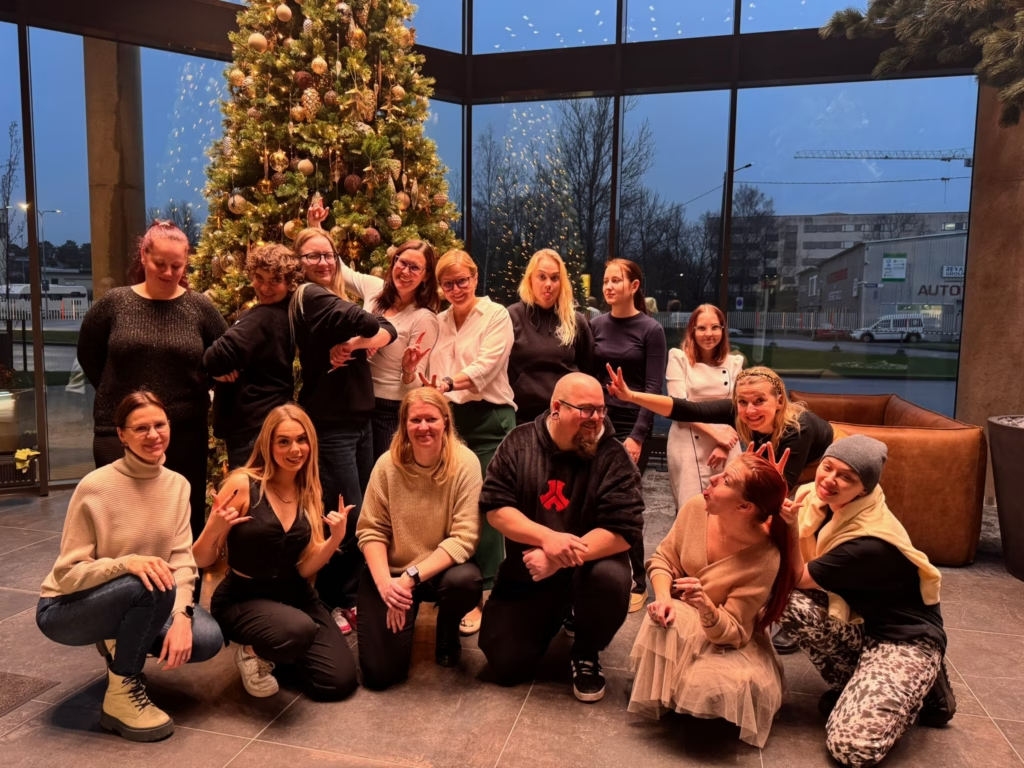

On August 1st of this year, we started the basic training for experience counselors with 13 young people under the leadership of Kogemuse Jõud trainers Kristi Peegel and Livia Laas. The training was preceded by writing a motivation letter and a group discussion, which gave us the opportunity to think about why we were starting this journey early on. The project was funded by the Noorte Heaks project competition, which allowed us to build the training thoroughly and substantively.
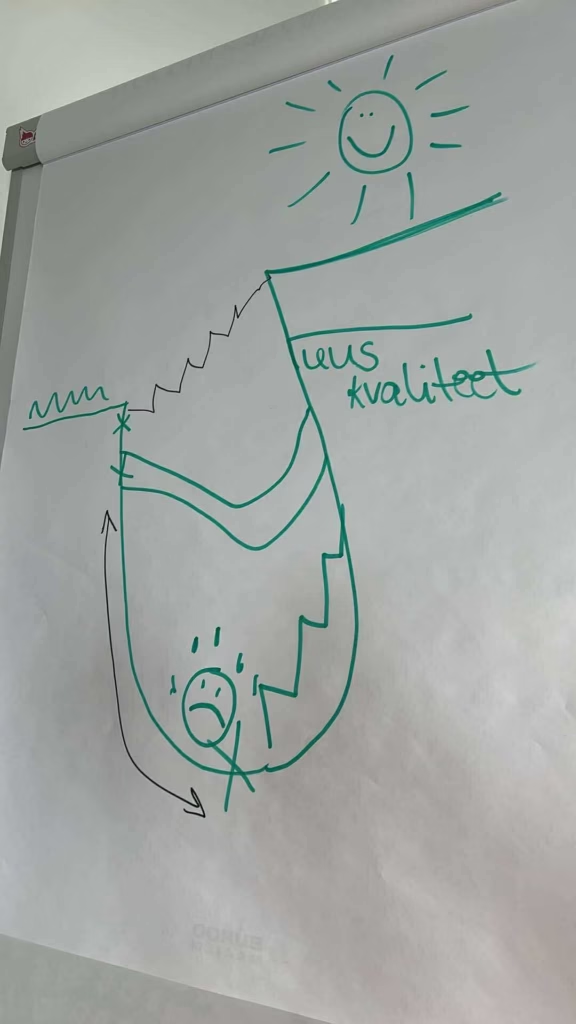
The first months were intense in terms of learning: we spent three days together in a row, fully immersed in the process. We got to know each other, the trainers, and also what experiential counseling really means and what kind of responsibility it entails. I also remember the initial fear and uncertainty about whether we would be able to cope at all and whether we had enough courage and skills to take on this role. The first days were more theory-related: we had to write an essay about the nature of counseling or a crisis, while the study included many practical tasks that helped connect the theory with real life. We were able to practice counseling both in a group and individually, experiencing how different and yet meaningful each conversation can be.
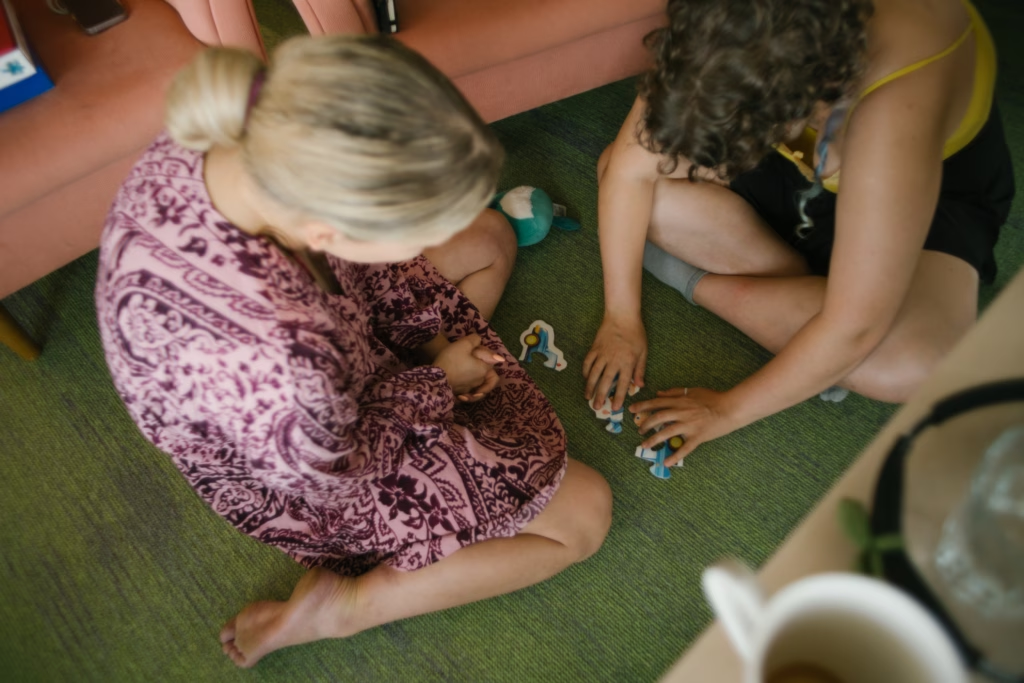
I especially remember the task where we were divided into pairs: one person was blindfolded and the other was only allowed to give instructions by mumbling „mmhm“ or „mkm“ to put together a small puzzle. This task severely tested both patience and the ability to really listen to the other person without taking over the situation. At the same time, it was very difficult for the person giving the instructions not to get frustrated because the puzzle pieces somehow didn’t fit together correctly. This experience revealed how important trust, presence, and respect for the other person’s pace are in counseling.
Trainers Kristi and Livia created an atmosphere for the entire group, where a safe and nurturing environment quickly developed. Such a space allowed us to show our hidden sides and highlight the vulnerable parts that are often hidden in everyday life. A real sense of community emerged, where everyone's story was important and valuable. When starting the training, many of us were worried about whether we would dare to tell our stories or how our experiences would be received. Over time, we found empathetic listeners in our peers who did not share judgments, but offered support and understanding and created the feeling that you were not alone in your experiences. Based on their long work experience, the trainers were able to provide very good real-life examples and offer real-life situations for discussion, which helped us better understand complex topics.
As time went on, we began to delve deeper into our stories and how our experiences influenced our willingness to support others. There were also those who were not yet ready to fully open this box, and that was perfectly acceptable. Those who did share their stories found that dealing with the story was healing and helped them better understand themselves and their boundaries. It also brought clarity to what topics or people they should not discuss in future counseling sessions for the sake of self-care.
Towards the end of the training, several practitioners were also invited to share their experiences with burnout, media reviews, and other aspects of experiential counseling work. Mari Roots spoke honestly and openly about her journey to burnout and what steps she has taken to cope better today. Kristiina Piiroja, who runs one of the most well-known social media accounts @yhelapselugu, shared her background and experiences with how to deal with comments online, stay yourself while maintaining your mental health, and what her daily counseling work looks like.
However, the training is not over yet: there are supervisions and internships ahead, where we can put what we have learned into practice in real life and further develop our role as an experienced advisor. We will also start testing the pilot very soon. trustee program within the framework of which it is possible to apply the acquired knowledge and skills even more broadly.
Many thanks to the Ministry of Education and Research's Youth for Good 2025 project, thanks to whom we were able to participate in the training for free.