
Young people are changing the world: a difficult experience can become a superpower
Enelis in the City, founder and board member of MTÜ Sa Suudad
In Estonia, young people are increasingly at the center of social change. In 2023, the international cooperation project i- Restore 2.0 was created [1] within the framework youth council, which includes young people who have had difficult experiences in life. The council acts as a platform where young people can make their voices heard. The results so far show that inclusion can transform both communities and the lives of young people themselves.
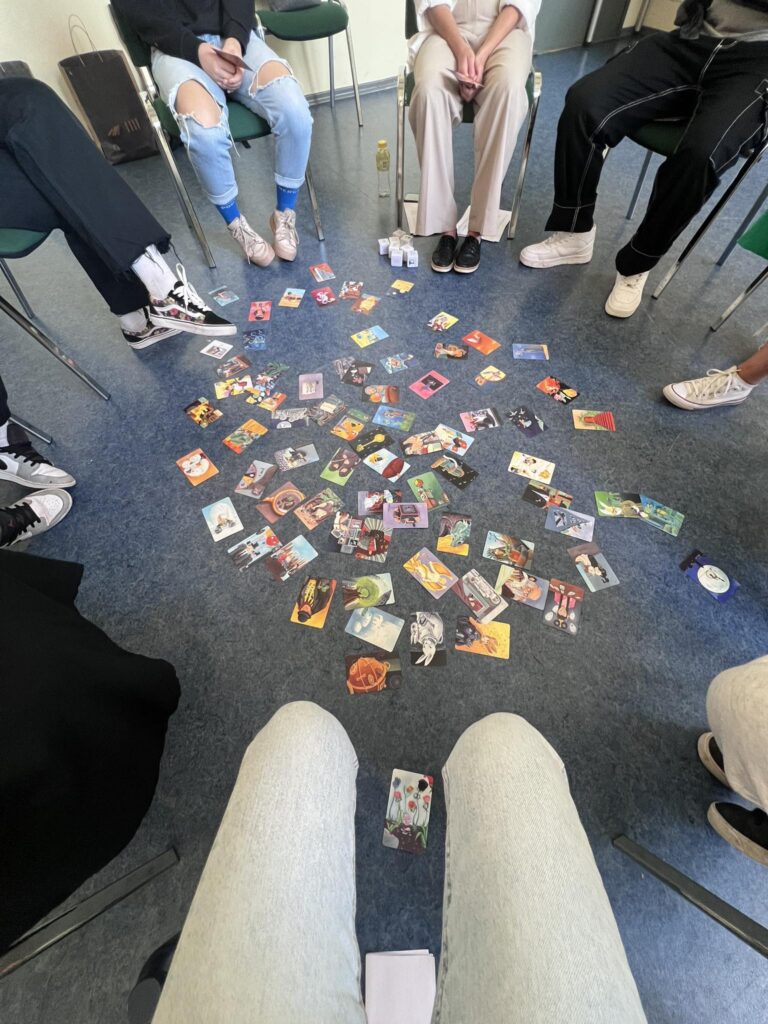
During the two years of the project, ten young people aged 16-21 who have been exposed to the social, legal and healthcare systems have contributed to the work of the council. Their life experiences have provided a unique perspective on both restorative justice and[2] development and implementation as well as the work of professionals working with young people more broadly. The young people met regularly and participated in a variety of activities: from information campaigns and creating games to contributing to changes in legislation. Currently, the two most active young people remain on the youth council, who voluntarily contribute both their time and energy so that today's young people have a more youth-friendly experience in the system than they themselves had.
What did the young people experience and learn?
The council’s biggest success story, according to the young people themselves, was a social media campaign that introduced the principles of restorative justice and encouraged them to resolve conflicts in a fair and safe way. The young people also attended conferences and met with policymakers. „It was very empowering to be listened to and to have our opinions matter,“ said one participant. „I felt like I was making a real difference.“
The young people highlighted that the project experience helped them develop important skills such as public speaking, teamwork and setting boundaries. For many young people, the principles of restorative justice became part of their lives. „I am not so emotional anymore, I can clearly express my needs and set boundaries,“ noted one participant.
For young people, cooperation with officials from the Ministry of Social Affairs, who were advised on the planning of amendments to the Child Protection Act, was particularly important. The Ministry promised to involve young people in the future. It is important for young people that their negative experience can benefit someone and that they can influence political decisions.
Young people pointed out that participating in this way gave them confidence that they could really contribute and created an environment where they were treated without prejudice, listened to and taken seriously. Young people felt that they were welcome guests at conferences and podcast’'ides, because their opinion is valued: "They really want to hear what we have to say. This is rewarding and a very positive feeling.".
The council also included mentors, whose task was to create a supportive atmosphere where young people felt heard. Together, they created a platform that challenged prejudices, influenced decisions, and stood up for young people with similar experiences. Experiential learning was particularly important: whether it was meetings with other young people who had similar experiences, or the opportunity to share their stories at an international conference. This helped young people see that their difficult experiences were valuable not only for themselves, but for society as a whole.
Project lessons learned
The experience of the Youth Council so far has also provided valuable lessons. While some young people found support and motivation to contribute, unfortunately not all were equally involved. In retrospect, it can be said that more was expected of some young people than they were able to give, which is why they gave up participating. There were also those whose other life activities did not allow them to contribute to the necessary extent. Unfortunately, misunderstandings also arose between young people, which were not resolved in a timely and appropriate manner. A larger number of mentors and the time and opportunity to contribute more to relationships with young people would certainly help with this.
Nevertheless, the contribution of each participant has been important, and for this we can thank every young person who gave even a little of their time and energy. In the future, it is important to create a more diverse model of involvement. We understood that involvement must give the freedom to choose how much and how young people want to contribute. Young people who want to contribute must be able to do so in a way that suits them, while taking into account the sense of fairness or injustice of other participants.
Why is all this important?
Young people who have had difficult experiences and therefore perhaps challenging behaviour bring important perspectives to discussions and developments in the field that officials often do not know or understand. Professionals know the field through the perspective of a specialist, but not through the experience of the young people who should be receiving help in this system. When young people are given the opportunity to share their stories and thoughts, they can lead to more effective solutions and break down common prejudices.
The experience of the Youth Council shows that when young people feel heard, their motivation to participate and shape society increases. This gives them the opportunity to see themselves not only as victims, but also as agents of change. Through their experiences, they become superheroes who make communities more caring and inclusive.
A look into the future
Although the youth council created during the project will cease operations at the end of the year, its impact will last. It proves that the voice of young people can be a powerful catalyst for change. The question now is how we can build on this experience and create an even better platform for young people to develop and contribute.
„Our stories have power, and when they are heard, they become the basis for change,“ said one young person. The council’s experience is not only important for the young people themselves. It proves that inclusion and collaboration are key to creating an open, caring and inclusive community.
The Youth Council has been running MTÜ Sa Suudad for the past six months, the main goal of which is to make the voices of young people who behave or have behaved in ways that are difficult to understand heard. The NGO wants to continue with the Youth Council in the new year, learning from the experience gained and making the involvement even more open: young people deserve it, for us to learn from our mistakes, create the necessary platforms for them and recognize them for their contribution!
[1] The i-RESTORE 2.0 project was created in cooperation with Romania, the Netherlands and Greece, and in Estonia, the activities are led by the Social Insurance Board. The project aims to develop restorative justice and child-friendly procedures. The activities are funded by the European Commission.
[2] Restorative justice is an approach that focuses on improving the consequences of a conflict or crime and taking responsibility, rather than punishing the perpetrator. The Social Insurance Board offers a conflict mediation service based on restorative justice. A police officer, school worker, youth worker, local government employee, prosecutor or other specialist can refer you to the service. You can also contact the service yourself. It is important that all parties are willing to participate in the process voluntarily.